Advanced nanofabrication and microfabrication

We enable cutting-edge research and product development. Thanks to our streamlined processes and expert customization, we can offer both cost-effective and high-quality solutions.

Microfluidic and nanofluidic systems for applications in life science

These systems are widely used in cell-biology research and enable measuring molecular interactions with high precision

Large-area and high-resolution electron beam lithography

Large-area nanostructuring for plasmonic sensing and metamaterials

Nanoplasmonics allows the detection of objects and reagents at extremely low concentrations or with utmost selectivity

Active devices for quantum computing & semiconductor technology

Case Studies

We have successfully worked with many companies and research groups over the years, providing key solutions and competitive advantages to our clients.
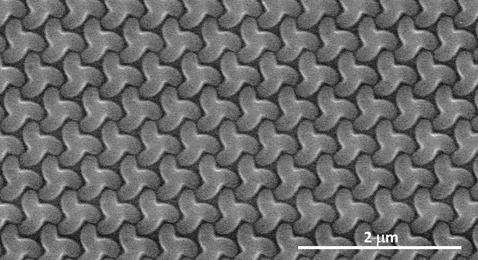
Qi, X., Pérez, L.A., Mendoza-Carreño, J. et al. Chiral plasmonic superlattices from template-assisted assembly of achiral nanoparticles. Nature Commun. 16, 1687 (2025). 


L.A. Pérez, J. Hu, J. Mendoza-Carreño, M. Garriga, M. Isabel Alonso, O. Arteaga, A. R. Goñi, A. Mihi

Strong Chiro-Optical Activity of Plasmonic Metasurfaces with Inverted Pyramid Arrays ACS Appl. Mater. Interfaces 17, 10, 15824–15835 (2025).


ICMAB-CSIC – Nanophotonics Group: Soft Nanoimprint Lithography for Optoelectronics 

The Nanophotonics Group at ICMAB specializes in soft nanoimprint lithography to design and integrate scalable, versatile photonic architectures into a wide range of optoelectronic devices and optical systems, significantly enhancing their performance and efficiency.


A key part of this research relies on rapid access to high-quality nanostructures acting as original master patterns. Through our collaboration with ConScience, we benefit from their ability to deliver precise, reproducible nanostructures with speed and reliability—laying the foundation for much of our experimental work.


The ability to quickly access high-quality nanostructures from ConScience has been essential to our research. Their support enables us to explore advanced photonic architectures with confidence.”
— Dr. Agustin Mihi, Nanophotonics Group, ICMAB


Whitley, K.D., Jukes, C., Tregidgo, N. et al.FtsZ treadmilling is essential for Z-ring condensation and septal constriction initiation in Bacillus subtiliscell division. Nature Commun. 12, 2448 (2021). 

Centre for Bacterial Cell Biology in the University of Newcastle, UK (Dr. Seamus Holden):
Microfabricated Vertical Traps for Bacteria

A group of researchers from the University of Newcastle developed a microfluidic trap—a nanopillar wafer—for vertical cell imaging (the method was named VerCINI). They wished to make the method easily available for other researchers without license restrictions or any financial benefit to themselves. Finding a supplier proved to be difficult—the nanopillar wafer has a complex design and the number of products needed is too small for a large-scale commercial fabrication. Demands on complexity, high precision, and a too-small volume are a core problem for many start-up companies and researchers who rely on micro- and nanofabrication, and this is exactly where our strength lies.

ConScience has developed a smooth process for fabrication of nanopillar wafers for the VerCINI method and supports the follow-up research.

Insplorion:
Nanoplasmonic sensors

The Gothenburg-based company Insplorion makes nanoplasmonic sensors used in their research instruments, and for hydrogen and air-quality sensing. Insplorion has its own nanofabrication but needed support to streamline and scale up.

Together with our team, they were able to improve their process, enabling faster fabrication of a higher number of products, highly specialized cleanroom processing, and standardized quality control.

“The mix of fast and flexible in combination with highly competent and knowledgeable service from ConScience has been essential in the development of our technology and our company.”

Insplorion, Johan Rask (CEO)

Ping Wang, Lydia Robert, James Pelletier, Wei Lien Dang, Francois Taddei, Andrew Wright, Suckjoon Jun “Robust Growth of Escherichia coli” Current Biology, 20 (12), 2010, 1099-1103.


UCSD Biological Sciences

(Dr. Suckjoon Jun):
High-precision custom microfluidics

The Jun lab at UCSD works with biological systems where Suckjoon Jun invented the mother machines concept - allowing for unprecented tracking of microbial cultures.


At the time, the Jun lab wanted to upgrade their mother machines designs and so needed new molds. They reached out to ConScience to assist them in building a custom designed mother machine mold.


Our team custom designed a mold for them which was lower cost and better performance than their original design. They were very happy with what we provided to them and have been a repeat customer ever since. In a tweet, Suckjoon Jun made the following statement:

We endorse them. We designed & ordered multiplex #mothermachine from them about a year ago. They delivered an excellent product. The price was reasonable, certainly far less than what it cost us back in 2008 at Harvard for the first #mothermachine. We will use them again.Prof. Suckjoon Jun, Inventor of mother machines

Publications

Examples of cutting-edge research that our nanofabrication expertise has made possible:


Buu Minh Tran et al. “ Phenotypic drug susceptibility testing forMycobacterium tuberculosisvariantbovisBCG in 12 hours” Nature Communications 2025, 16, 4366.


Alberto Pérez J. Hu, J. Mendoza-Carreño, M. Garriga, M. Isabel Alonso, O. Arteaga, A. R. Goñi, A.Mihi "Strong Chiro-Optical Activity of Plasmonic Metasurfaces with Inverted Pyramid Arrays”

ACS Appl. Mater. Interfaces 2025, 17, 10, 15824–15835


Qi, X., Pérez, L.A., Mendoza-Carreño, J.et al. Chiral plasmonic superlattices from template-assisted assembly of achiral nanoparticles. Nat Communications 2025, 16, 1687. 


Jones, D. et al. Kinetics Of dCas9 Target Search In Escherichia Coli. Science 2017, 357, 1420-1424.


Hammar, P. et al. Direct Measurement Of Transcription Factor Dissociation Excludes A Simple Operator Occupancy Model For Gene Regulation. Nature Genetics 2014, 46, 405-408.


Dreos, A. et al. Exploring The Potential Of A Hybrid Device Combining Solar Water Heating And Molecular Solar Thermal Energy Storage. Energy & Environmental Science 2017, 10, 728-734. 


Müller, V. et al. Rapid Tracing Of Resistance Plasmids In A Nosocomial Outbreak Using Optical DNA Mapping. ACS Infectious Diseases 2016, 2, 322-328. 


Xu, X. et al. Directed assembly of multiplexed single chirality carbon nanotube devices. Journal of Applied Physics 129, 024305 (2021); 


Clement, P. et al. Direct Synthesis of Multiplexed Metal-Nanowire-Based Devices by Using Carbon Nanotubes as Vector Templates. Angew. Chem. Int. Ed. 2019, 58, 9928 –9932


Kipper, K. et al. Application Of Noncanonical Amino Acids For Protein Labeling In A Genomically Recoded Escherichia Coli. ACS Synthetic Biology 2016, 6, 233-255. 


Motta, M. et al. Enhanced Pinning In Superconducting Thin Films With Graded Pinning Landscapes. Applied Physics Letters 2013, 102, 212601. 


Wallden, M. et al. The Synchronization Of Replication And Division Cycles In Individual E. Coli Cells. Cell 2016, 166, 729-739. 


Fornander, L. et al. Visualizing The Nonhomogeneous Structure Of RAD51 Filaments Using Nanofluidic Channels. Langmuir 2016, 32, 8403-8412. 


Friedrich, R. et al. A Nano Flow Cytometer For Single Lipid Vesicle Analysis. Lab on a Chip 2017, 17, 830-841. 


Frykholm, K. et al. Fast Size-Determination Of Intact Bacterial Plasmids Using Nanofluidic Channels. Lab on a Chip 2015, 15, 2739-2743. DOI: 10.1039/C5LC00378D


Paintdakhi, A. et al. Oufti: An Integrated Software Package For High-Accuracy, High-Throughput Quantitative Microscopy Analysis. Molecular Microbiology 2015, 99, 767-777. 


Lawson, M. et al. In Situ Genotyping Of A Pooled Strain Library After Characterizing Complex Phenotypes. Molecular Systems Biology 2017, 13, 947. 


Baltekin, Ö. et al. Antibiotic Susceptibility Testing In Less Than 30 Min Using Direct Single-Cell Imaging. Proceedings of the National Academy of Sciences 2017, 114, 9170-9175.


Sanamrad, A. et al. Single-Particle Tracking Reveals That Free Ribosomal Subunits Are Not Excluded From The Escherichia Coli Nucleoid. Proceedings of the National Academy of Sciences 2014, 111, 11413-11418. 


Marklund, E. et al. Transcription-Factor Binding And Sliding On DNA Studied Using Micro- And Macroscopic Models. Proceedings of the National Academy of Sciences 2013, 110, 19796-19801. 


Nyberg, L. et al. Rapid Identification Of Intact Bacterial Resistance Plasmids Via Optical Mapping Of Single DNA Molecules. Scientific Reports 2016, 6. 


Persson, F. et al. Lipid-Based Passivation In Nanofluidics. Nano Letters 2012, 12, 2260-2265.


Tanyeli, I. et al. Nanoplasmonic NO2 Sensor With A Sub-10 Parts Per Billion Limit Of Detection In Urban Air. ACS Sensors 2022, 7, 1008-1018. DOI: 10.1021/acssensors.1c02463


Levin, S. et al. A Nanofluidic Device For Parallel Single Nanoparticle Catalysis In Solution. Nature Communications 2019, 10, 4426. 


Alekseeva, S. et al. Grain-Growth Mediated Hydrogen Sorption Kinetics and Compensation Effect in Single Pd Nanoparticles. Nature Communications 2021, 12, 5427. 


Alekseeva, S. et al. Grain boundary mediated hydriding phase transformations in individual polycrystalline metal nanoparticles. Nature Communications 2017, 8, 1084.


Syrenova, S. et al. Hydride Formation Thermodynamics and Hysteresis in Individual Pd Nanocrystals with Different Size and Shape. Nature Materials 2015, 14, 1236-1244. 


Syrenova, S. et al. Shrinking-Hole Colloidal Lithography: Self- Aligned Nanofabrication of Complex Plasmonic Nanoantennas. Nano Letters 2014, 14 (5), 2655- 2663. DOI: 10.1021/nl500514y


Börjesson, K. et al. Photon Upconversion Facilitated Molecular Solar Energy Storage. Journal of Materials Chemistry A 2013, 1, 8521. 


Dreos, A. et al. Exploring The Potential Of A Hybrid Device Combining Solar Water Heating And Molecular Solar Thermal Energy Storage. Energy & Environmental Science 2017, 10, 728-734. 


Wang, Z. et al. Liquid-Based Multijunction Molecular Solar Thermal Energy Collection Device. Advanced Science 2021, 8, 2103060. 


Xu, X. et al. Tuning Electrostatic Gating Of Semiconducting Carbon Nanotubes By Controlling Protein Orientation In Biosensing Devices. Angewandte Chemie 2021, 133, 20346-20351.